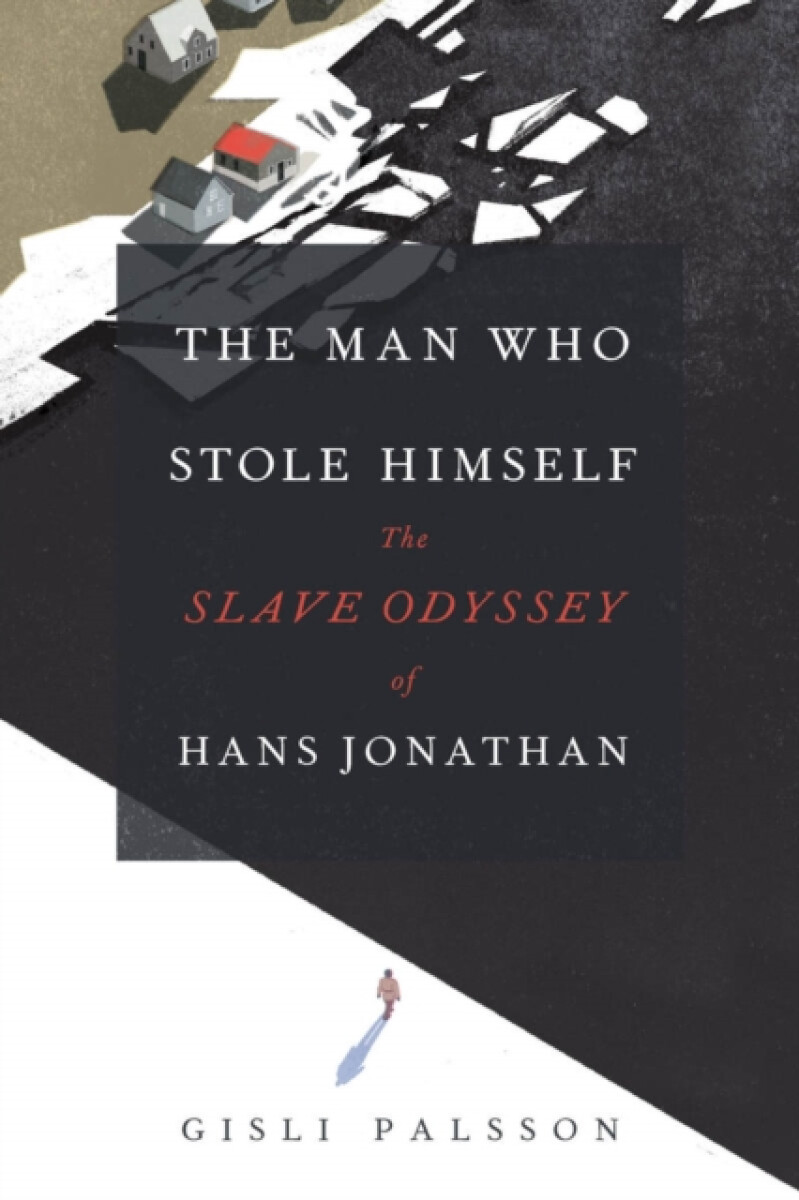
The Man Who Stole Himself
Knihu koupíte v
1 e-shopu
od
528 Kč
Pokud se vám po kliknutí na tlačítko "Do obchodu" nezobrazí stránka knihy ve vybraném e-shopu, je třeba vypnout AdBlock ve vašem prohlížeči pro naši stránku.
Návod na vypnutí je například na adrese https://o.seznam.cz/jak-vypnout-adblock/#1.
Krátký popis
The life story of Hans Jonathan, Iceland's first Black
citizen. The island nation of Iceland is known for many
things—majestic landscapes, volcanic eruptions, distinctive
seafood—but racial diversity is not one of them. So the
little-known story of Hans Jonathan, a free Black man who lived and
raised a family in early nineteenth-century Iceland, is improbable
and compelling, the stuff of novels. In The Man Who Stole Himself,
Gisli Palsson lays out the story of Hans Jonathan (also known as
Hans Jónatan) in stunning detail. Born into slavery in St. Croix
in 1784, Hans was taken as a slave to Denmark, where he eventually
enlisted in the navy and fought on behalf of the country in the
1801 Battle of Copenhagen. After the war, he declared himself a
free man, believing that he was due freedom not only because of his
patriotic service, but because while slavery remained legal in the
colonies, it was outlawed in Denmark itself. He thus became the
subject of one of the most notorious slavery cases in European
history, which he lost. Then Hans ran away—never to be heard from
in Denmark again, his fate unknown for more than two hundred years.
It’s now known that Hans fled to Iceland, where he became a
merchant and peasant farmer, married, and raised two children.
Today, he has become something of an Icelandic icon, claimed as a
proud and daring ancestor both there and among his descendants in
America. The Man Who Stole Himself brilliantly intertwines Hans
Jonathan’s adventurous travels with a portrait of the Danish
slave trade, legal arguments over slavery, and the state of
nineteenth-century race relations in the Northern Atlantic world.
Throughout the book, Palsson traces themes of imperial dreams,
colonialism, human rights, and globalization, which all come
together in the life of a single, remarkable man. Hans literally
led a life like no other. His is the story of a man who had the
temerity—the courage—to steal himself.
Výběr knih autora
Gísli Pálsson



Zobrazit všechny knihy autora
Gísli Pálsson
Výběr knih vydavatele
University of Chicago Press





Zobrazit všechny knihy vydavatele
University of Chicago Press
Naše tipy