Potsdam
Knihu koupíte v
2 e-shopech
od
1 056 Kč
Pokud se vám po kliknutí na tlačítko "Do obchodu" nezobrazí stránka knihy ve vybraném e-shopu, je třeba vypnout AdBlock ve vašem prohlížeči pro naši stránku.
Návod na vypnutí je například na adrese https://o.seznam.cz/jak-vypnout-adblock/#1.

Krátký popis
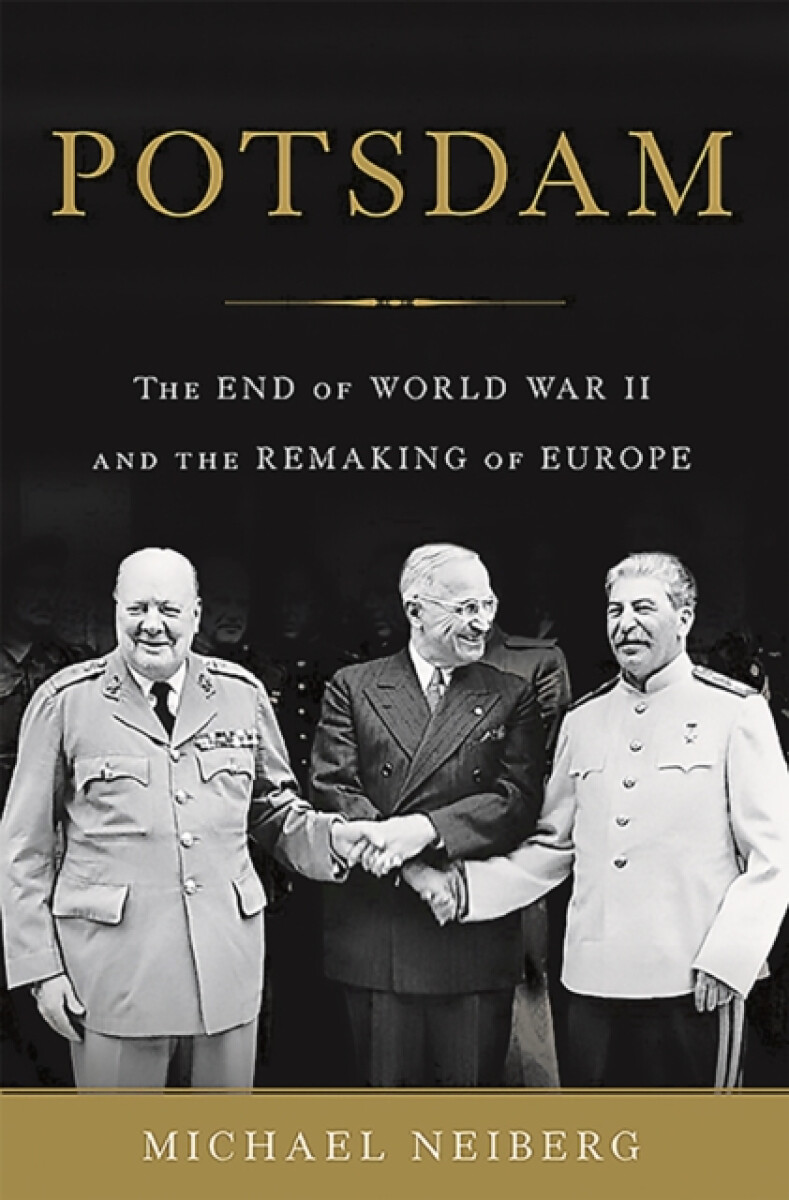
The definitive account of the 1945 Potsdam Conference: the historic
summit where Truman, Stalin, and Churchill met to determine the
fate of post-World War II Europe After Germany''s defeat in World
War II, Europe lay in tatters. Millions of refugees were dispersed
across the continent. Food and fuel were scarce. Britain was
bankrupt, while Germany had been reduced to rubble. In July of
1945, Harry Truman, Winston Churchill, and Joseph Stalin gathered
in a quiet suburb of Berlin to negotiate a lasting peace: a peace
that would finally put an end to the conflagration that had started
in 1914, a peace under which Europe could be rebuilt. The
award-winning historian Michael Neiberg brings the turbulent
Potsdam conference to life, vividly capturing the delegates''
personalities: Truman, trying to escape from the shadow of Franklin
Roosevelt, who had died only months before; Churchill, bombastic
and seemingly out of touch; Stalin, cunning and meticulous. For the
first week, negotiations progressed relatively smoothly. But when
the delegates took a recess for the British elections, Churchill
was replaced-both as prime minster and as Britain''s representative
at the conference-in an unforeseen upset by Clement Attlee, a man
Churchill disparagingly described as "a sheep in sheep''s
clothing." When the conference reconvened, the power dynamic had
shifted dramatically, and the delegates struggled to find a new
balance. Stalin took advantage of his strong position to demand
control of Eastern Europe as recompense for the suffering
experienced by the Soviet people and armies. The final resolutions
of the Potsdam Conference, notably the division of Germany and the
Soviet annexation of Poland, reflected the uneasy geopolitical
equilibrium between East and West that would come to dominate the
twentieth century. As Neiberg expertly shows, the delegates arrived
at Potsdam determined to learn from the mistakes their predecessors
made in the Treaty of Versailles. But, riven by tensions and
dramatic debates over how to end the most recent war, they only
dimly understood that their discussions of peace were giving birth
to a new global conflict.
Výběr knih vydavatele
Basic Books



Zobrazit všechny knihy vydavatele
Basic Books
Naše tipy


- Právě probíhající akce a slevy na knihy
-
Knihydobrovsky.cz | do 30.06.2026
-
Knihydobrovsky.cz | do 30.06.2026
-
Knihydobrovsky.cz | do 30.06.2026
-
Knihydobrovsky.cz | do 16.08.2026
-
Knihydobrovsky.cz | do 31.08.2026
- zobrazit všechny akce