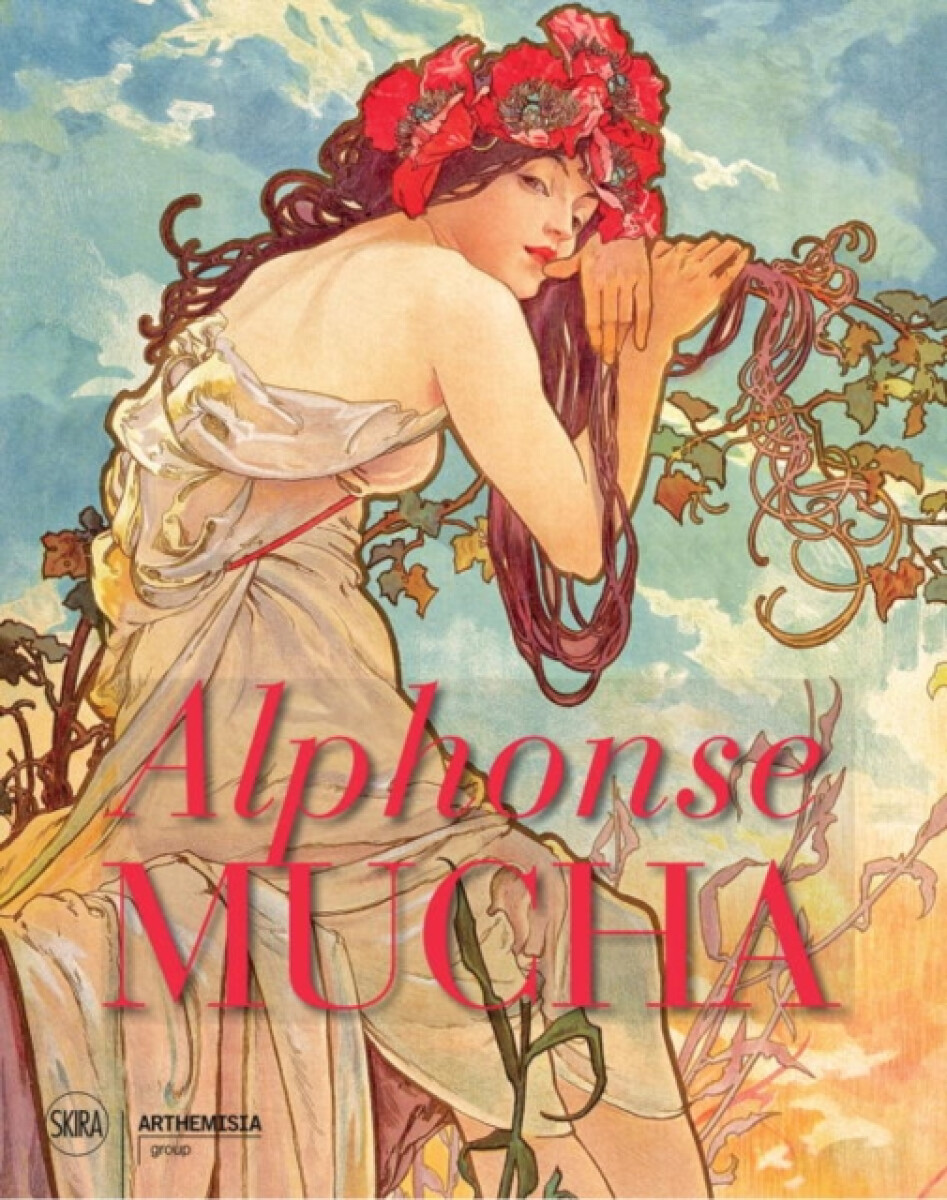
Alphonse Mucha
Knihu koupíte v
1 e-shopu
od
990 Kč
Pokud se vám po kliknutí na tlačítko "Do obchodu" nezobrazí stránka knihy ve vybraném e-shopu, je třeba vypnout AdBlock ve vašem prohlížeči pro naši stránku.
Návod na vypnutí je například na adrese https://o.seznam.cz/jak-vypnout-adblock/#1.
Krátký popis
Mucha as mystic, bohemian and philosopherSpanning the entirety of
Alphonse MuchaÂ’s prolific career, this handsome, affordable and
concise overview examines the beloved artist’s oeuvre—from
posters, jewelry, interior decoration, theater and product design
to painting, book illustration, sculpture and photography—across
six themed sections that highlight the artist’s personality: “A
Bohemian in Paris”; “A Picture-Maker for People”; “A
Cosmopolitan”; “The Mystic”; “The Patriot”; and “The
Artist-Philosopher.”Mucha rose to fame in fin-de-siècle Paris
with his elegant theater posters for Sarah Bernhardt, the most
famous French actress of the time, and his decorative panels
featuring gracefully posed women. For these posters, Mucha created
a distinctive style characterized by harmonious compositions,
sinuous forms and a muted palette, which became synonymous with the
newly emerging decorative style of the time—Art Nouveau. By the
time of the Paris Exposition Universelle of 1900, Mucha had become
a leading figure in this decorative-art movement, and he defined
the look of the era. The catalog explores the development of
MuchaÂ’s career and overall achievements as a multifaceted and
visionary artist.Czech painter Alphonse Mucha (1860–1939) leapt to
fame in 1895, in Paris, when his poster “Gismonda,” created for
the superstar Sarah Bernhardt, heralded the birth of “Le Style
Mucha.” Between 1903 and 1922 Mucha made four trips to the United
States, where he attracted the patronage of Charles Richard Crane,
a Chicago industrialist and Slavophile, who subsidized MuchaÂ’s
epic series of 20 large historical paintings illustrating the
“Epic of the Slavic People” (1912–30). After 1922 Mucha lived in
Czechoslovakia, where he died in 1939.
Vývoj ceny
Aktuální Ø cena knihy Alphonse Mucha je 990 Kč
Výběr knih vydavatele
Skira


Zobrazit všechny knihy vydavatele
Skira
Naše tipy


- Právě probíhající akce a slevy na knihy
-
Knihydobrovsky.cz | do 30.06.2026
-
Knihydobrovsky.cz | do 30.06.2026
-
Knihydobrovsky.cz | do 30.06.2026
-
Knihydobrovsky.cz | do 16.08.2026
-
Knihydobrovsky.cz | do 31.08.2026
- zobrazit všechny akce