The Money Kings
Knihu koupíte v
1 e-shopu
od
627 Kč
Pokud se vám po kliknutí na tlačítko "Do obchodu" nezobrazí stránka knihy ve vybraném e-shopu, je třeba vypnout AdBlock ve vašem prohlížeči pro naši stránku.
Návod na vypnutí je například na adrese https://o.seznam.cz/jak-vypnout-adblock/#1.
Krátký popis
The incredible saga of the German-Jewish immigrants—with now
familiar names like Goldman and Sachs, Kuhn and Loeb, Warburg and
Schiff, Lehman and Seligman—who profoundly influenced the rise of
modern finance (and so much more), from the New York Times
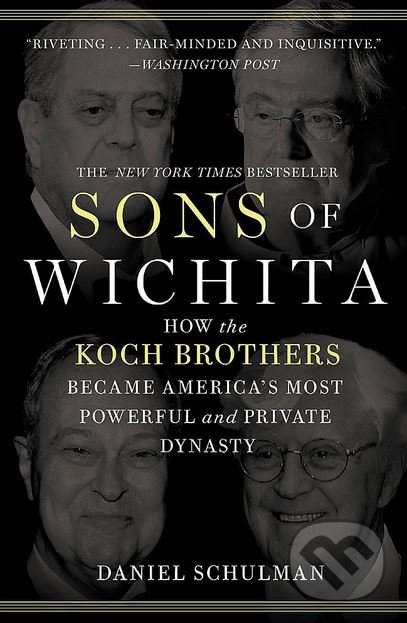
best-selling author of Sons of WichitaJoseph Seligman arrived in
the United States in 1837, with the equivalent of $100 sewn into
the lining of his pants. Then came the Lehman brothers, who would
open a general store in Montgomery, Alabama. Not far behind were
Solomon Loeb and Marcus Goldman, among the “Forty-Eighters”
fleeing a Germany that had relegated Jews to an underclass.These
industrious immigrants would soon go from peddling trinkets and
buying up shopkeepersÂ’ IOUs to forming what would become some of
the largest investment banks in the world—Goldman Sachs, Kuhn
Loeb, Lehman Brothers, J. & W. Seligman & Co. They would clash and
collaborate with J. P. Morgan, E. H. Harriman, Jay Gould, and other
famed tycoons of the era. And their firms would help to transform
the United States from a debtor nation into a financial superpower,
capitalizing American industry and underwriting some of the
twentieth centuryÂ’s quintessential companies, like General Motors,
MacyÂ’s, and Sears. Along the way, they would shape the destiny not
just of American finance but of the millions of Eastern European
Jews who spilled off steamships in New York Harbor in the early
1900s, including Daniel SchulmanÂ’s paternal grandparents.
ÂIn TheÂMoney Kings, Schulman unspools a sweeping
narrative that traces the interconnected origin stories of these
financial dynasties. He chronicles their paths to Wall Street
dominance, as they navigated the deeply antisemitic upper class of
the Gilded Age, and the complexities of the Civil War, World War I,
and the Zionist movement that tested both their burgeoning empires
and their identities as Americans, Germans, and Jews.
Výběr knih autora
Daniel Schulman

Zobrazit všechny knihy autora
Daniel Schulman
Výběr knih vydavatele
Random House





Zobrazit všechny knihy vydavatele
Random House
Naše tipy




- Právě probíhající akce a slevy na knihy
-
Knihydobrovsky.cz | do 30.06.2026
-
Knihydobrovsky.cz | do 30.06.2026
-
Knihydobrovsky.cz | do 30.06.2026
-
Knihydobrovsky.cz | do 16.08.2026
-
Knihydobrovsky.cz | do 31.08.2026
- zobrazit všechny akce