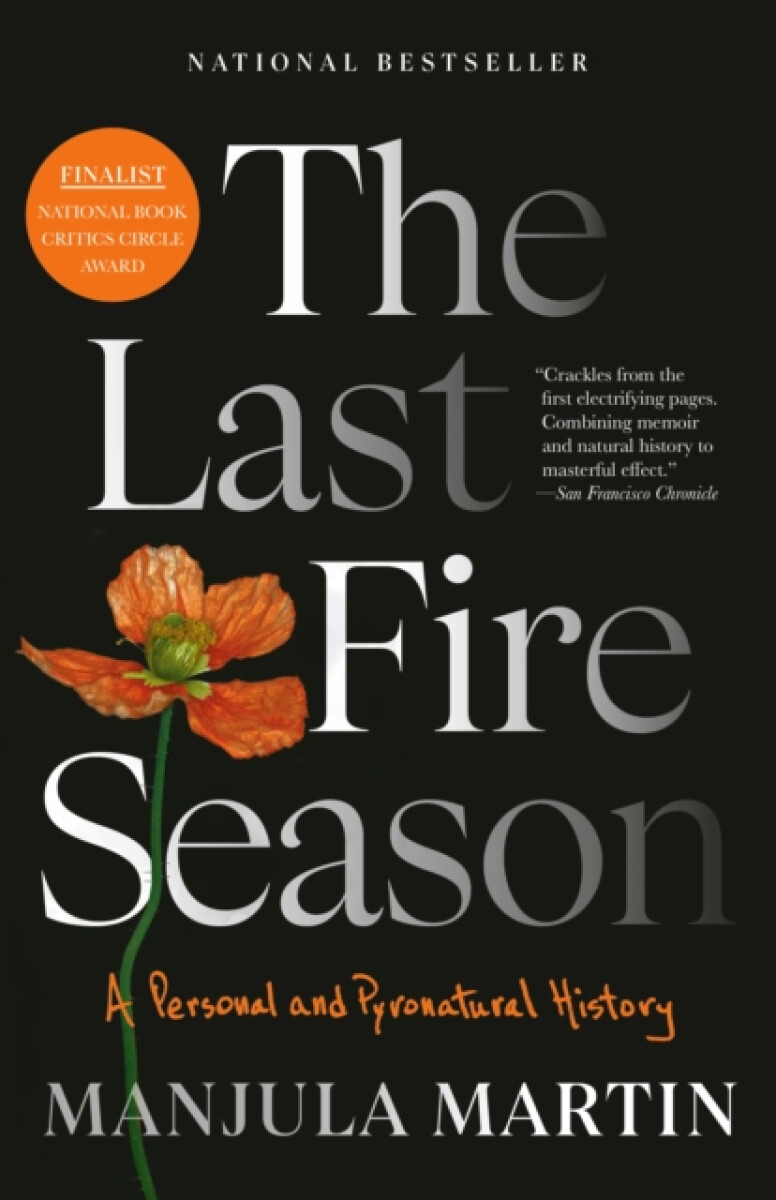
The Last Fire Season
Knihu koupíte v
1 e-shopu
od
528 Kč
Pokud se vám po kliknutí na tlačítko "Do obchodu" nezobrazí stránka knihy ve vybraném e-shopu, je třeba vypnout AdBlock ve vašem prohlížeči pro naši stránku.
Návod na vypnutí je například na adrese https://o.seznam.cz/jak-vypnout-adblock/#1.
Krátký popis
H Is for Hawk meets Joan Didion in the Pyrocene in this arresting
combination of memoir, natural history, and literary inquiry that
chronicles one womanÂ’s experience of life in Northern California
during the worst fire season on record.NATIONAL BESTSELLER•
AN NPR BEST BOOK OF THE YEAR • A MOST-ANTICIPATED BOOK: The New
York Times,ÂThe Los Angeles Times,ÂThe San Francisco
Chronicle,ÂThe Saturday Evening Post,ÂPoets & Writers,
The Millions,ÂAlta,ÂHeat Map NewsTold in luminous,
perceptive prose, The Last Fire Season is a deeply incisive inquiry
into what it really means—now—to live in relationship to the
elements of the natural world. When Manjula Martin moved from the
city to the woods of Northern California, she wanted to be closer
to the wilderness that she had loved as a child. She was also
seeking refuge from a health crisis that left her with chronic
pain, and found a sense of healing through tending her garden
beneath the redwoods of Sonoma County. But the landscape that
Martin treasured was an ecosystem already in crisis. Wildfires
fueled by climate change were growing bigger and more frequent:
each autumn, her garden filled with smoke and ash, and the local
firehouse siren wailed deep into the night.In 2020, when a dry
lightning storm ignited hundreds of simultaneous wildfires across
the West and kicked off the worst fire season on record, Martin,
along with thousands of other Californians, evacuated her home in
the midst of a pandemic. Both a love letter to the forests of the
West and an interrogation of the colonialist practices that led to
their current dilemma, The Last Fire Season, follows her from the
oaky hills of Sonoma County to the redwood forests of coastal Santa
Cruz, to the pines and peaks of the Sierra Nevada, as she seeks
shelter, bears witness to the devastation, and tries to better
understand fireÂ’s role in the ecology of the West. As Martin seeks
a way to navigate the daily experience of living in a damaged body
on a damaged planet, she comes to question her own assumptions
about nature and the complicated connections between people and the
land on which we live.
Výběr knih autora
Manjula Martin


Zobrazit všechny knihy autora
Manjula Martin
Výběr knih vydavatele
Random House USA Inc

Zobrazit všechny knihy vydavatele
Random House USA Inc
Naše tipy



- Právě probíhající akce a slevy na knihy
-
Knihydobrovsky.cz | do 30.06.2026
-
Knihydobrovsky.cz | do 30.06.2026
-
Knihydobrovsky.cz | do 30.06.2026
-
Knihydobrovsky.cz | do 16.08.2026
-
Knihydobrovsky.cz | do 31.08.2026
- zobrazit všechny akce