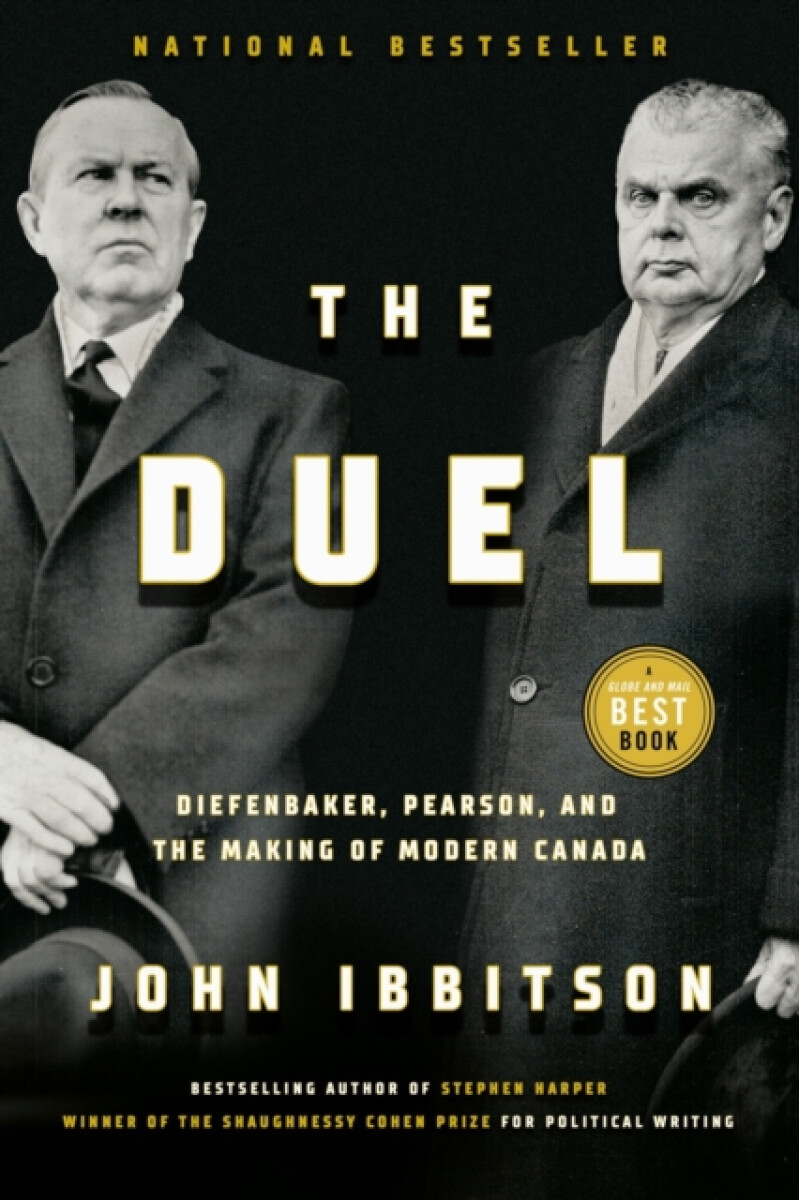
The Duel
Knihu koupíte v
1 e-shopu
od
627 Kč
Pokud se vám po kliknutí na tlačítko "Do obchodu" nezobrazí stránka knihy ve vybraném e-shopu, je třeba vypnout AdBlock ve vašem prohlížeči pro naši stránku.
Návod na vypnutí je například na adrese https://o.seznam.cz/jak-vypnout-adblock/#1.
Krátký popis
John Diefenbaker has been unfairly treated by history. Although he
wrestled with personal demons, his governments launched major
reforms in public health care, law reform and immigration. On his
watch, First Nations on reserve obtained the right to vote and the
federal government began to open up the North. He established
Canada as a leader in the struggle against apartheid in South
Africa, and took the first steps in making Canada a leader in the
fight against nuclear proliferation. And Diefenbaker''s Bill of
Rights laid the groundwork for the Charter of Rights and Freedoms.
He set in motion many of the achievements credited to his
successor, Lester B. Pearson. Pearson, in turn, gave coherence to
Diefenbaker''s piecemeal reforms. He also pushed Parliament to
adopt a new, and now much-loved, Canadian flag against
Diefenbaker''s fierce opposition. Pearson understood that if Canada
were to be taken seriously as a nation, it must develop a stronger
sense of self. Pearson was superbly prepared for the role of prime
minister: decades of experience at External Affairs, respected by
leaders from Washington to Delhi to Beijing, the only Canadian to
win the Nobel Prize for Peace. Diefenbaker was the better
politician, though. If Pearson walked with ease in the halls of
power, Diefenbaker connected with the farmers and small-town
merchants and others left outside the inner circles. Diefenbaker
was one of the great orators of Canadian political life; Pearson
spoke with a slight lisp. Diefenbaker was the first to get his name
in the papers, as a crusading attorney: Diefenbaker for the
Defence, champion of the little man. But he struggled as a
politician, losing five elections before making it into the House
of Commons, until his ascension to the Progressive Conservative
leadership in 1956 through a freakish political accident. As a
young university professor, Pearson caught the attention of the
powerful men who were shaping Canada''s first true department of
foreign affairs, rising to prominence as the helpful fixer, the man
both sides trusted, the embodiment of a new country that had earned
its place through war in the counsels of the great powers:
ambassador, undersecretary, minister, peacemaker. Everyone knew he
was destined to be prime minister. But in 1957, destiny took a
detour. Then they faced each other, Diefenbaker v Pearson, across
the House of Commons, leaders of their parties, each determined to
wrest and hold power, in a decade-long contest that would shake and
shape the country.
Výběr knih autora
John Ibbitson

Zobrazit všechny knihy autora
John Ibbitson
Výběr knih vydavatele
McClelland & Stewart Inc.
Zobrazit všechny knihy vydavatele
McClelland & Stewart Inc.
Naše tipy




- Právě probíhající akce a slevy na knihy
-
Knihydobrovsky.cz | do 30.06.2026
-
Knihydobrovsky.cz | do 30.06.2026
-
Knihydobrovsky.cz | do 30.06.2026
-
Knihydobrovsky.cz | do 16.08.2026
-
Knihydobrovsky.cz | do 31.08.2026
- zobrazit všechny akce