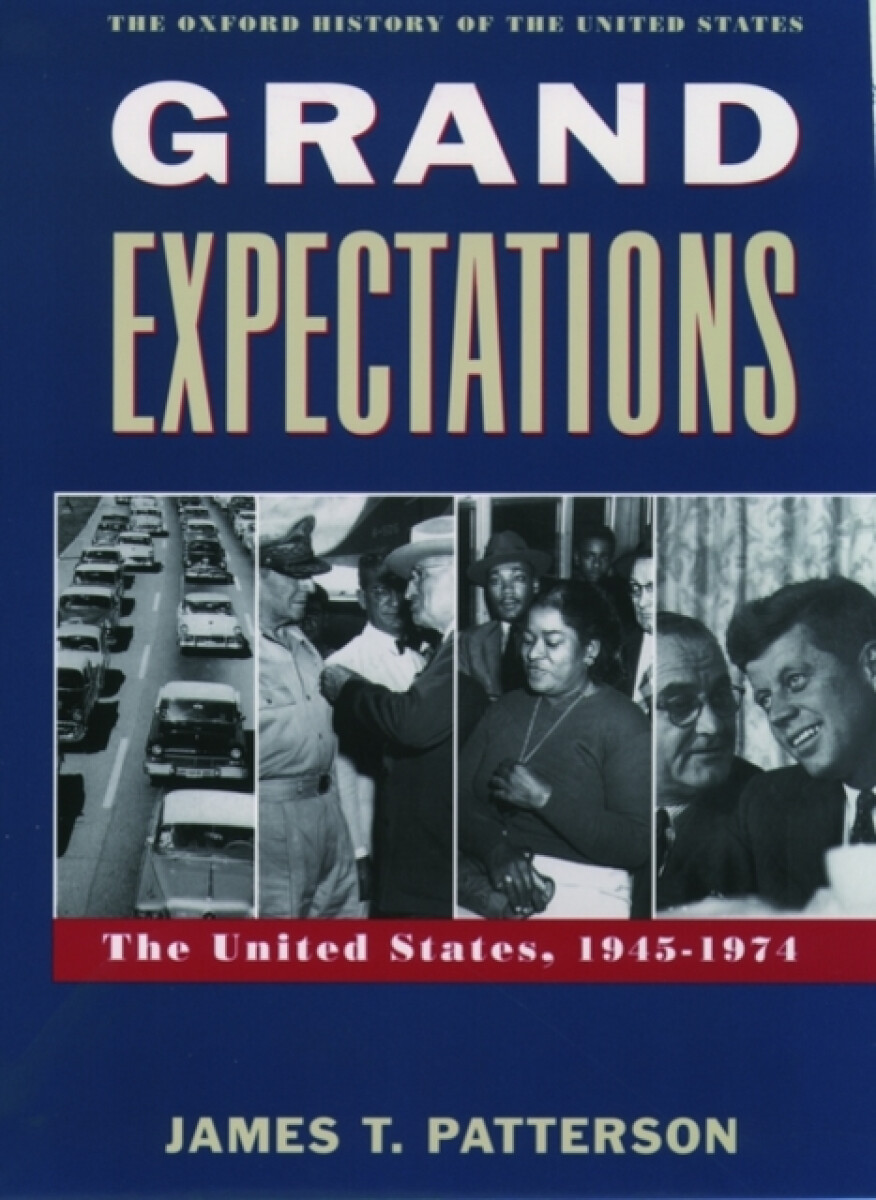
Grand Expectations
Knihu koupíte v
2 e-shopech
od
809 Kč
Pokud se vám po kliknutí na tlačítko "Do obchodu" nezobrazí stránka knihy ve vybraném e-shopu, je třeba vypnout AdBlock ve vašem prohlížeči pro naši stránku.
Návod na vypnutí je například na adrese https://o.seznam.cz/jak-vypnout-adblock/#1.

Krátký popis
Beginning in 1945, America rocketed through a quarter-century of
extraordinary economic growth, experiencing an amazing boom that
soared to unimaginable heights in the 1960s. At one point, in the
late 1940s, American workers produced 57 percent of the planet''s
steel, 62 percent of the oil, 80 percent of the automobiles. The
U.S. then had three-fourths of the world''s gold supplies. English
Prime Minister Edward Heath later said that the United States in
the post-War era enjoyed "the greatest prosperity the world has
ever known." It was a boom that produced a national euphoria, a
buoyant time of grand expectations and an unprecedented faith in
our government, in our leaders, and in the American dream--an
optimistic spirit which would be shaken by events in the ''60s and
''70s, and particularly by the Vietnam War. Now, in Grand
Expectations, James T. Patterson has written a highly readable and
balanced work that weaves the major political, cultural, and
economic events of the period into a superb portrait of America
from 1945 through Watergate. Here is an era teeming with memorable
events--from the bloody campaigns in Korea and the bitterness
surrounding McCarthyism to the assassinations of the Kennedys and
Martin Luther King, to the Vietnam War, Watergate, and Nixon''s
resignation. Patterson excels at portraying the amazing growth
after World War II--the great building boom epitomized by Levittown
(the largest such development in history) and the baby boom (which
exploded literally nine months after V-J Day)--as well as the
resultant buoyancy of spirit reflected in everything from
streamlined toasters, to big, flashy cars, to the soaring,
butterfly roof of TWA''s airline terminal in New York. And he shows
how this upbeat, can-do mood spurred grander and grander
expectations as the era progressed. Of course, not all Americans
shared in this economic growth, and an important thread running
through the book is an informed and gripping depiction of the civil
rights movement--from the electrifying Brown v. Board of Education
decision, to the violent confrontations in Little Rock, Birmingham,
and Selma, to the landmark civil rights acts of 1964 and 1965.
Patterson also shows how the Vietnam War--which provoked LBJ''s
growing credibility gap, vast defense spending that dangerously
unsettled the economy, and increasingly angry protests--and a
growing rights revolution (including demands by women, Hispanics,
the poor, Native Americans, and gays) triggered a backlash that
widened hidden rifts in our society, rifts that divided along
racial, class, and generational lines. And by Nixon''s resignation,
we find a national mood in stark contrast to the grand expectations
of ten years earlier, one in which faith in our leaders and in the
attainability of the American dream was becoming shaken. Grand
Expectations is the newest volume in the prestigious Oxford History
of the United States. The earlier releases were highly acclaimed,
and one, Battle Cry of Freedom, was both a New York Times
bestseller and a winner of the Pulitzer Prize. Patterson''s volume
takes its rightful place beside these distinguished works. It is a
brilliant summation of the years that created the America that we
know today, a time of setbacks amid unmatched and lasting
achievements.
Vývoj ceny
Aktuální Ø cena knihy Grand Expectations je 710 Kč
Výběr knih autora
James T. Patterson
Zobrazit všechny knihy autora
James T. Patterson
Výběr knih vydavatele
Oxford University Press







Zobrazit všechny knihy vydavatele
Oxford University Press
Naše tipy




- Právě probíhající akce a slevy na knihy
-
Knihydobrovsky.cz | do 30.06.2026
-
Knihydobrovsky.cz | do 30.06.2026
-
Knihydobrovsky.cz | do 30.06.2026
-
Knihydobrovsky.cz | do 16.08.2026
-
Knihydobrovsky.cz | do 31.08.2026
-
Kosmas.cz | do 31.08.2026
- zobrazit všechny akce