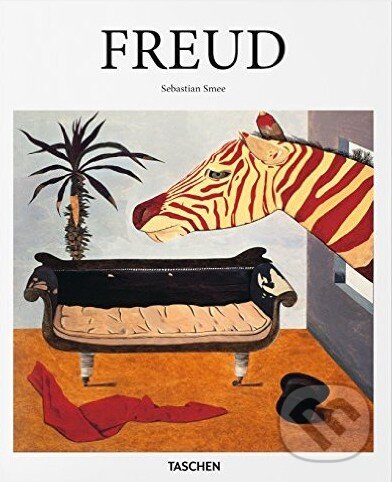
Freud
Knihu koupíte v
1 e-shopu
Pokud se vám po kliknutí na tlačítko "Do obchodu" nezobrazí stránka knihy ve vybraném e-shopu, je třeba vypnout AdBlock ve vašem prohlížeči pro naši stránku.
Návod na vypnutí je například na adrese https://o.seznam.cz/jak-vypnout-adblock/#1.
Krátký popis
Lucian Freud (1922–2011) was interested in the telling of truth.
Always operating outside the main currents of 20th-century art, the
esteemed portrait painter observed his subjects with the regimen
and precision of a laboratory scientist. He recorded not only the
blotches, bruises, and swellings of the living body, but also,
beneath the flaws and folds of flesh, the microscopic details of
what lies within: the sensation, the emotion, the intelligence, the
bloom, and the inevitable, unstoppable decay. Despite rejecting
parallels between him and his renowned grandfather, the correlation
between Lucian Freud's sitting process for portraiture and Sigmund
Freud's psychotherapy sessions is a fascinating element to this
figurative oeuvre. Despite the thickness of the impasto surfaces,
Freud's portraits of subjects as varied as the Queen, Kate Moss,
and an obese job center supervisor, penetrate the physicality of
the body with a direct and often disarming insight. The result is
as much a psychological interrogation as it is an uneasy
examination of the relationship between artist and model. This book
brings together some of Freud's most outstanding and unapologetic
portraits, to introduce an artist widely considered one of the
finest masters of the human form. The author Sebastian Smee is art
critic at the Boston Globe. He was born and raised in Australia and
lived in London between 2000 and 2004. He has contributed essays to
several books on Lucian Freud, and his articles have been published
in The Daily Telegraph, The Guardian and The Spectator.
Vývoj ceny
Aktuální Ø cena knihy Freud je 361 Kč
Výběr knih autora
Sebastian Smee
Zobrazit všechny knihy autora
Sebastian Smee
Výběr knih vydavatele
Taschen
Zobrazit všechny knihy vydavatele
Taschen
Naše tipy


- Právě probíhající akce a slevy na knihy
-
Knihydobrovsky.cz | do 30.06.2026
-
Knihydobrovsky.cz | do 30.06.2026
-
Knihydobrovsky.cz | do 30.06.2026
-
Knihydobrovsky.cz | do 16.08.2026
-
Knihydobrovsky.cz | do 31.08.2026
- zobrazit všechny akce