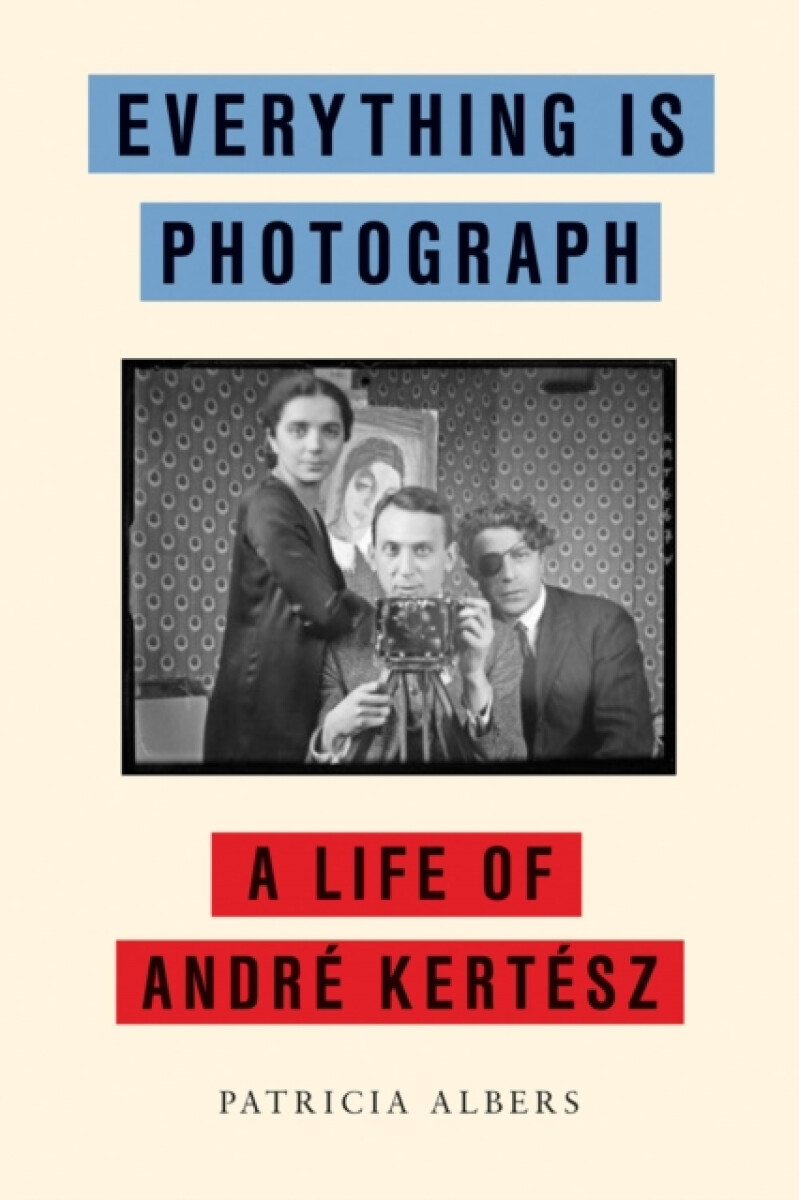
Everything Is Photograph
Knihu koupíte v
1 e-shopu
od
1 485 Kč
Pokud se vám po kliknutí na tlačítko "Do obchodu" nezobrazí stránka knihy ve vybraném e-shopu, je třeba vypnout AdBlock ve vašem prohlížeči pro naši stránku.
Návod na vypnutí je například na adrese https://o.seznam.cz/jak-vypnout-adblock/#1.
Krátký popis
The first full biography of this innovative 20th-century
photographer vividly depicts his life and works from Hungary to
France and America.Born in Budapest in 1894, André Kertész soared
to star status in Jazz Age Paris, tumbled into poverty and
obscurity in wartime New York, slogged through 14 years shooting
for House & Garden, then improbably reemerged into the spotlight
with a 1964 retrospective at New YorkÂ’s Museum of Modern Art. By
the time of his death in 1985, he had exhibited around the world,
taken more than 100,000 images, and steered the medium in new and
vital directions: He was the first major photographer to embrace
the Leica, the camera now mythically linked to street photography,
and he pioneered subjective photojournalism, publishing what is
arguably the worldÂ’s first great photo essay.Drawing on dozens of
interviews, previous scholarship, and deep archival research, and
interrogating the images themselves, Patricia Albers retrieves
aspects of Kertész’s life that he and his pictures gloss over,
among them the ordeals of trench warfare, the impact of the
Holocaust, and the tale of his tangled romances. She takes Kertész
from the Eastern front in World War I to the Paris of Piet
Mondrian, Colette, Alexander Calder, and a lively Central European
diaspora. From Condé Nast’s postwar media empire to the “photo
boom” of the 1970s. She revisits Kertész’s relationships with
other photographers, among them his frenemy Brassaï and protégé
Robert Capa. She breathes life into a gentle, generous, and
unassuming man endowed with Old-World charm but also sputtering
with grievance and rage and inclined to indulge in deception.
Everything Is Photograph immerses readers in the heyday of a
now-lost version of photography. Freshly seen, formally vigorous,
emotionally rich, and aesthetically charged, Kertész’s images
speak of the medium as a tool for human connection, inquiry about
the world, self-narration, and self-invention, even as they project
its mysteries.
Výběr knih autora
Patricia Albers


Zobrazit všechny knihy autora
Patricia Albers
Výběr knih vydavatele
Other Press LLC


Zobrazit všechny knihy vydavatele
Other Press LLC
Naše tipy


- Právě probíhající akce a slevy na knihy
-
Knihydobrovsky.cz | do 08.04.2026
-
Knihydobrovsky.cz | do 18.04.2026
-
Knihydobrovsky.cz | do 30.04.2026
-
Knihydobrovsky.cz | do 31.05.2026
-
Knihydobrovsky.cz | do 30.06.2026
- zobrazit všechny akce