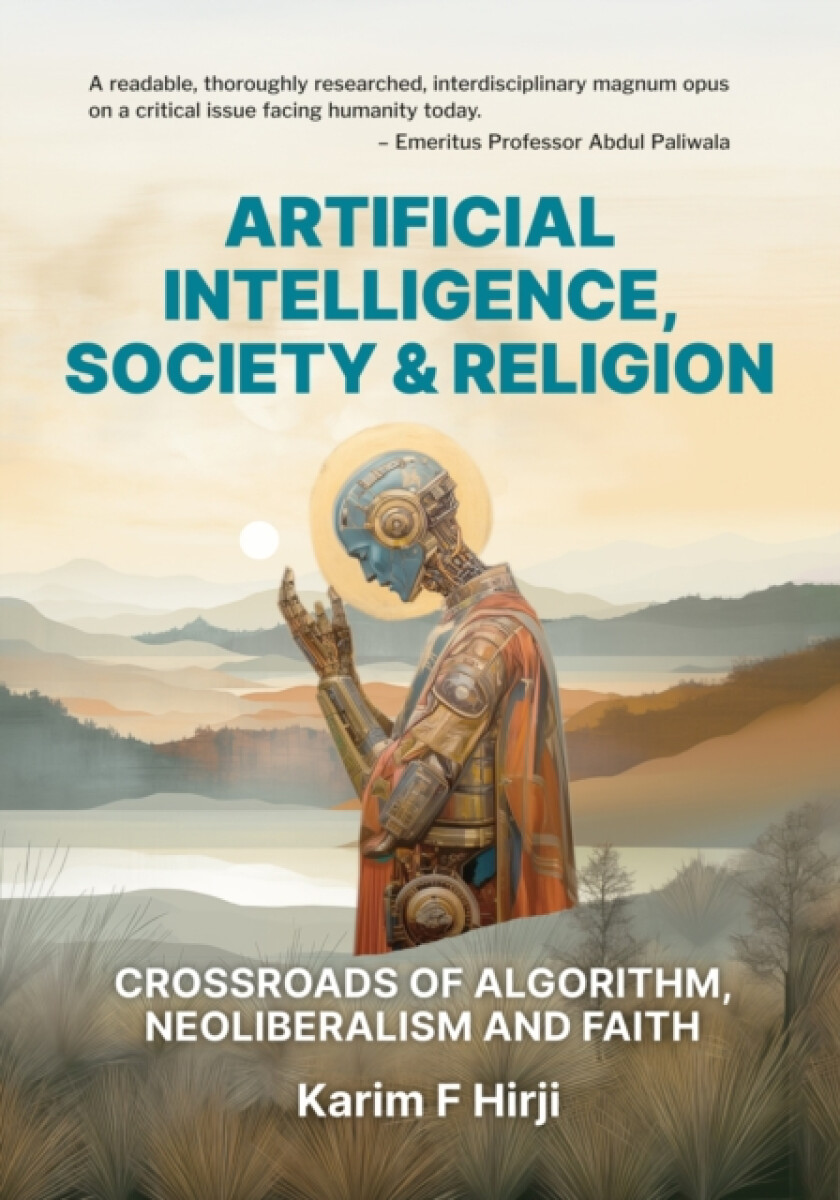
Artificial Intelligence, Society and Religion
Knihu koupíte v
1 e-shopu
od
1 650 Kč
Pokud se vám po kliknutí na tlačítko "Do obchodu" nezobrazí stránka knihy ve vybraném e-shopu, je třeba vypnout AdBlock ve vašem prohlížeči pro naši stránku.
Návod na vypnutí je například na adrese https://o.seznam.cz/jak-vypnout-adblock/#1.
Krátký popis
Humans derive information from a complex natural and social
environment, learn from experience, create tools, adapt to change,
plan actions, act in a critical and rational manner, and formulate
concrete and abstract ideas. In other words, humans have
intelligence. A machine that displays some or all of these
characteristics has artificial intelligence (AI). Attempts to
create AI systems have a long history. Yet, AI systems emerged
hardly a decade ago. Since then, AI has developed remarkable
capabilities. Modern AI platforms and AI-powered robots can, among
other things, converse, give erudite lectures, write essays and
advertising material, create images and videos, drive cars and
guide drones, initiate and conduct science research, diagnose and
make treatments plans for sick individuals, and so on. The impact
of AI is evident in virtually all fields of human activity. The
rapid pace of AI has stirred debate on whether it will not only
induce mass unemployment, inequality and a major social crisis but
also that one day, sentient artificial beings smarter than humans
will take over the world. RELIGION, SOCIETY AND ARTIFICIAL
INTELLIGENCE has three basic aims. One, it provides an accessible
description of AI, its capabilities and its advantages and
disadvantages. Two, it explores the societal implications of the
increasing AI penetration into different facets of life. Three, it
looks at the confluence of AI, social factors and religion in
general terms and for specific religions, that is, Hinduism,
Buddhism, Christianity, Islam and Secularism. This book inquires:
Are religion and AI compatible at the philosophical, ethical and
spiritual levels? If it comes about, can sentient AI have a soul or
join a religion? Are the societal roles of religion and AI
complimentary or conflicting? Are the institutions, leaders and
laity of the varied religions embracing or rejecting AI? What are
the implications of AI being used for conducting prayers, and
facilitating other religious activities? Can religion and AI be
harnessed to jointly deal with the major problems like climate
change, unequal education, poverty and war facing humanity today?
Building on the foundation laid in the earlier three books in this
series, these issues are tackled in an interdisciplinary,
historical and widely accessible manner. In particular, the
exposition is cognizant of the fact that modern religions and AI
systems function in the context of the global neoliberal system
and, in practice, reflect the values of that system. Technical
material relating to AI is kept to a minimum.
Výběr knih vydavatele
Daraja Press




Zobrazit všechny knihy vydavatele
Daraja Press
Naše tipy




- Právě probíhající akce a slevy na knihy
-
Knihydobrovsky.cz | do 30.06.2026
-
Knihydobrovsky.cz | do 30.06.2026
-
Knihydobrovsky.cz | do 30.06.2026
-
Knihydobrovsky.cz | do 16.08.2026
-
Knihydobrovsky.cz | do 31.08.2026
- zobrazit všechny akce